Lately I've been deep in AI tools, figuring out how they fit into my workflow. Vibe coding has been genuinely fun, and what strikes me most is how much closer it brings designers to code. That shift changes not just how products get built, but how design and engineering teams think and move together.
That exploration led me to build something real: TCK Time.
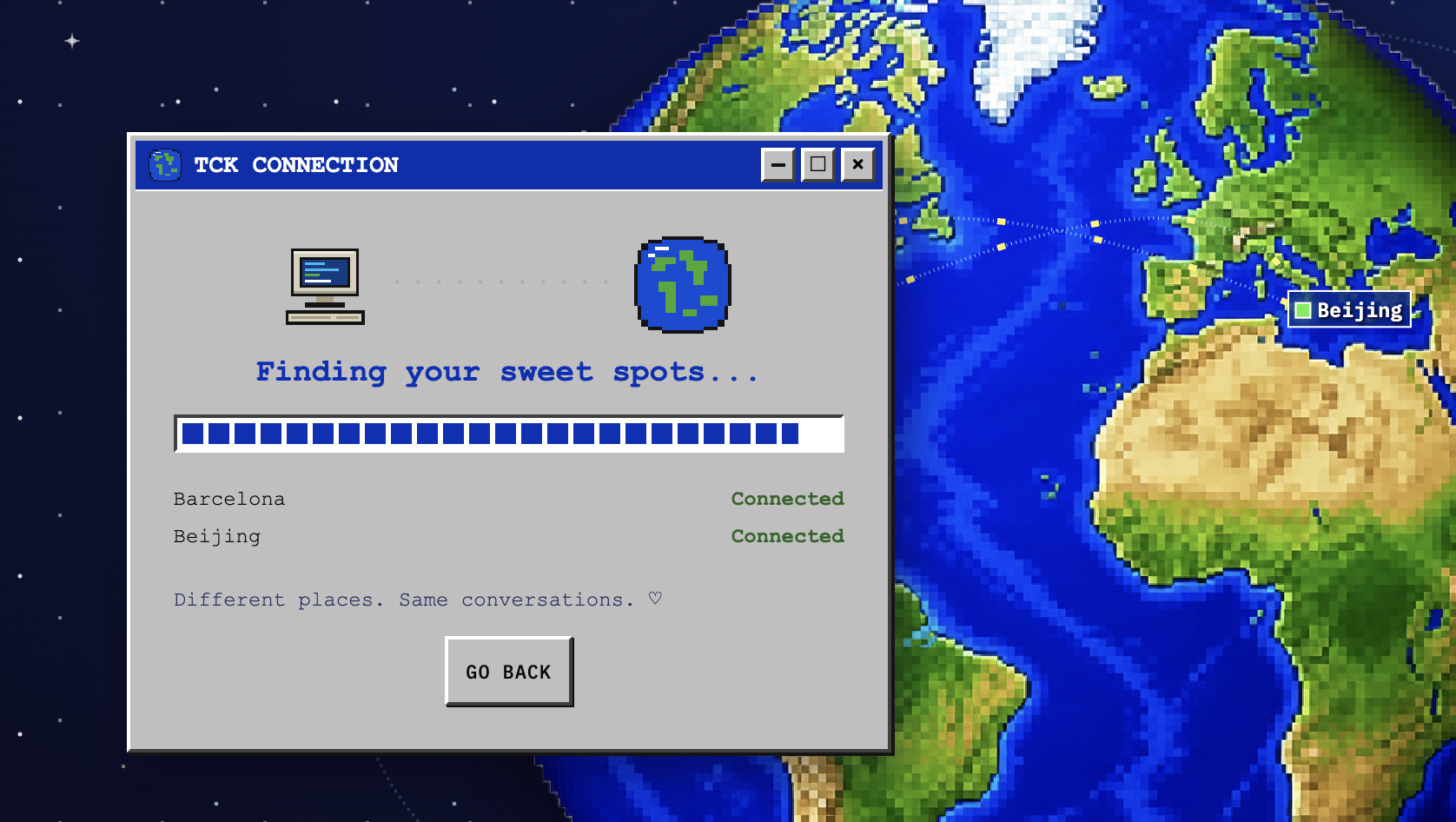
The need was personal. I went to international school, and some of my closest friends from those days are still my closest friends, except we now live everywhere: New York, Germany, the UK, Sri Lanka, New Zealand. Add kids, and finding time to talk starts to feel impossible. Every attempt meant digging through some broken, ugly time zone website, screenshotting it, and dropping it into WhatsApp, and somehow still getting it wrong.
So I built something simpler: you add your people, where they are, and the date you want to talk. TCK Time finds the actual sweet spot, the window where everyone's genuinely available. Sometimes that means someone's up a bit early or late, but the tool is finding the best overlap possible, not just settling for one that works.
The design came from a different place.
The more I played with AI-generated products, the more everything looked the same: clean, minimal, white space, rounded cards, soft gradients. It looks good, but starts to feel like every product was designed by the same person.
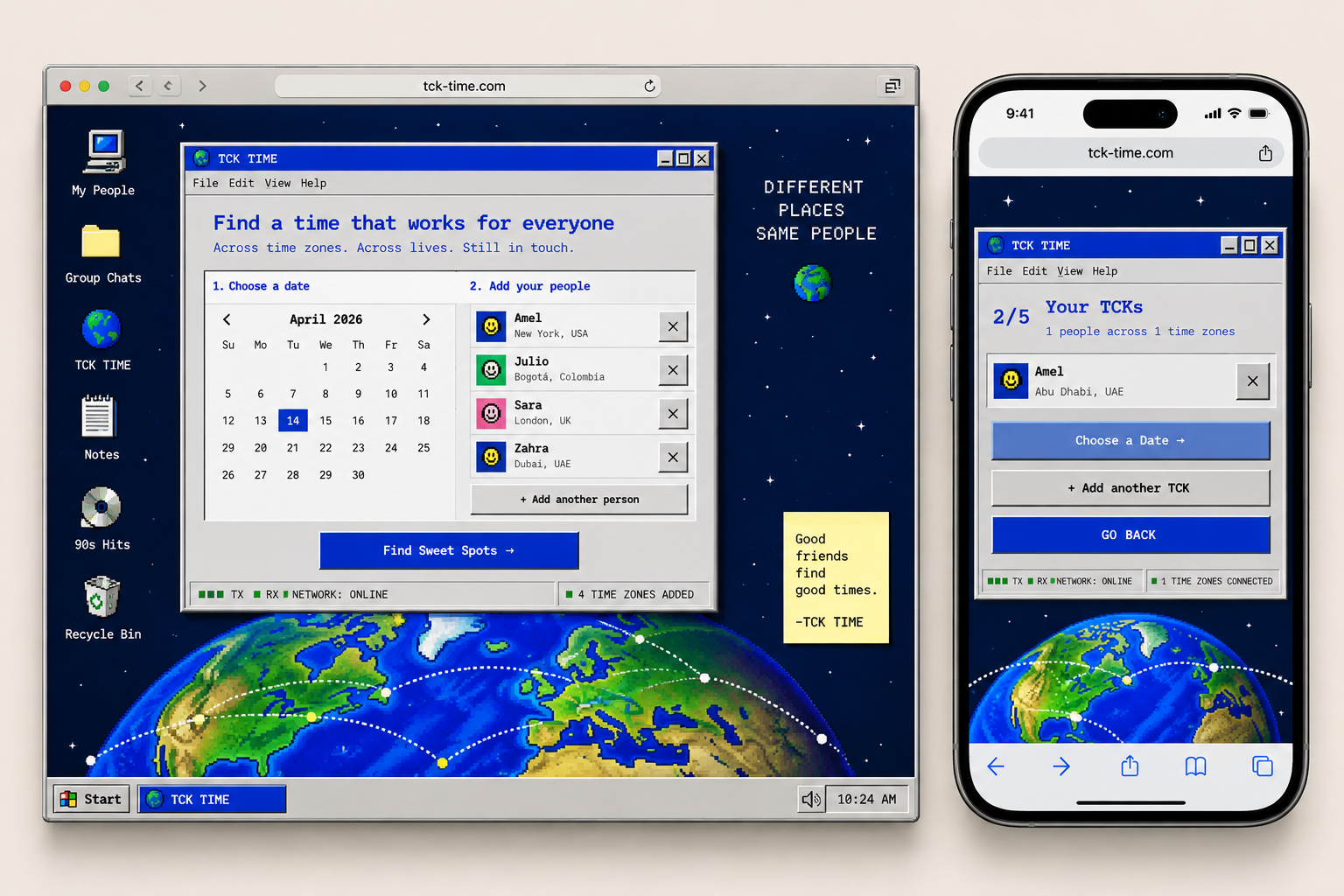
So I went the opposite direction, back to the computers I grew up with in the 90s. Windows, blue title bars, gray boxes, pixel icons, loading bars, the Start button. Nothing minimal. Everything had personality.
It also felt weirdly right for TCK Time. That era of the internet was obsessed with being connected: globes, dotted lines circling the planet, blinking "online" lights. Reaching someone across the world felt magical. As a 90s kid, I don't think that era will ever stop feeling nostalgic to me.
So I leaned all the way in. TCK Time lives inside a fake 90s desktop, complete with a giant pixelated globe, network lights, folders, a Start menu, a 90s Hits CD, and a few other things to find if you click around. The actual tool behaves like a little Windows program running on top of it.
There's something funny about using AI and vibe coding, both incredibly new, to build something that looks like it shipped on a CD-ROM in 1998.
It's branded for third culture kids because that's where the idea comes from: people whose friends and family ended up scattered across countries, cultures, and time zones.
Really, it's a tiny tool for answering a question my friends and I have been asking for years:
Okay, but what time actually works for everyone?
Check it out here: tck-time.com